Multi-location retail and QSR operators have been conditioned to think about connectivity the same way they think about electricity. It's infrastructure. It's invisible when it works and catastrophic when it doesn't. The difference is that nobody's electric company is sunsetting copper lines, changing pricing structures, or telling you that cellular LTE is now your most reliable fallback.
Connectivity has changed. Most retail and QSR technology budgets haven't kept up with that change.
The Location That Loses Connectivity Loses the Transaction
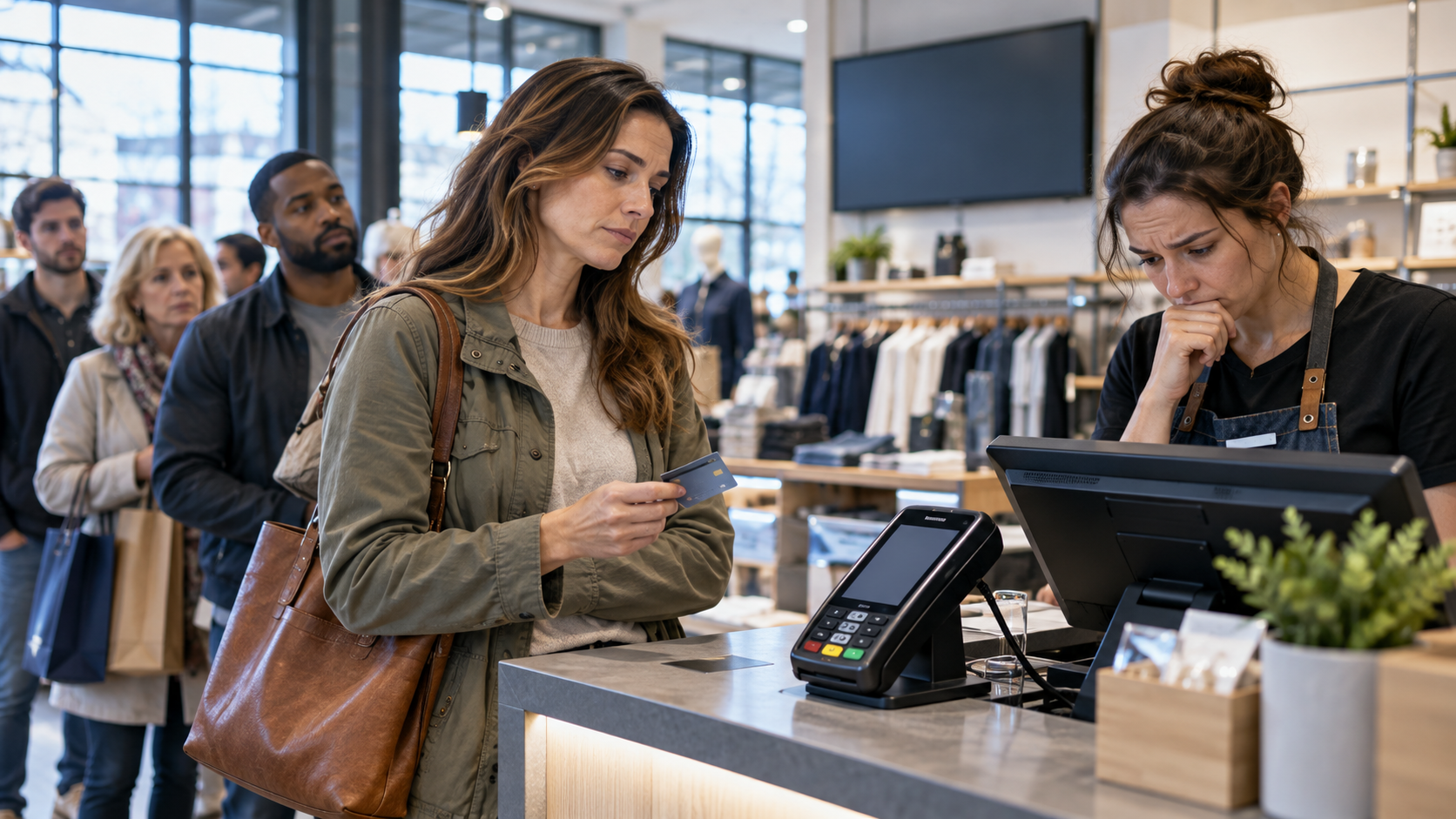
The economics are simple and brutal. A quick service restaurant that loses network connectivity loses the ability to process credit and debit card payments, which account for more than 90% of transactions in most QSR environments today. An outage during a lunch rush isn't an inconvenience. It's a direct revenue event, compounded by the guest experience damage that comes with it.
Retailers face the same dynamic. Inventory management, loyalty program transactions, digital signage, and cloud-based POS all depend on reliable connectivity. When the primary circuit goes down, operations either stop or revert to manual processes that are slower, less accurate, and harder to reconcile after the fact.
What's changed in the last several years is that the cellular networks have become fast enough and reliable enough to serve as a viable secondary path rather than just an emergency backup. 4G LTE and 5G cellular can now handle the throughput requirements of active retail and QSR operations. The technology to deploy it cost-effectively across a multi-location portfolio exists. The question is whether you have an advisor who's putting it in front of you.
How Cellular Backup Actually Works in Practice
A cellular failover architecture using a 4G LTE or 5G router sits behind your primary circuit. Under normal conditions, it's idle. When the primary circuit fails, whether from a physical line issue, a provider outage, or a configuration problem, the cellular connection activates automatically, typically within seconds. Point-of-sale systems stay online. Transactions continue. The guest or customer experience is unaffected.
Modern cellular routers designed for commercial deployments, like those from Cradlepoint, offer cloud-managed configuration, which means your IT team or managed service provider can see the status of every location's connectivity from a single dashboard, push configuration changes remotely, and identify locations that are running on failover before the location manager even calls. That visibility is worth significant time and operational overhead for any organization managing 20 or more locations.
The 2026-27 Telarus Tech Trends Report identifies network resilience as one of the top priorities for multi-location operators this year, driven directly by the increasing revenue dependency on cloud-based systems at the edge. If your POS, your loyalty program, your digital ordering system, and your back-office reporting all require connectivity to function, then connectivity is no longer just infrastructure. It's a revenue-critical system that deserves to be treated like one.
The Carrier Diversity Question Nobody Is Asking
Most multi-location businesses that have a primary broadband circuit and a cellular backup haven't thought carefully about carrier diversity. If your primary circuit is from a local telco and your cellular failover is on the same provider's network, you have not actually diversified your risk. A regional outage that takes down your primary circuit is likely to affect your cellular backup as well.
True resilience means routing your primary and secondary paths through physically separate networks. Broadband from a cable or fiber provider with cellular failover on a different carrier's network is the standard architecture. For higher-criticality environments, dual cellular from two separate national carriers provides an additional layer of protection. An independent technology advisor who works with carriers across the ecosystem can design that architecture objectively, without steering you toward any single provider's solution.
What Locations Are at the Greatest Risk
Not every location in a multi-location portfolio carries equal risk. Locations in markets where fiber availability is limited, locations that depend on aging copper infrastructure, and locations with high transaction volume per hour face disproportionate exposure from a connectivity outage. Identifying your highest-risk locations and prioritizing resilience improvements there first is how you get the most operational impact for each dollar invested.
APA works with retail and QSR operators to assess their current connectivity posture across their location portfolio, identify the locations and circuits at highest risk, and design and source a resilience architecture that matches the actual business risk at each site. We work with 200-plus carriers and have no financial incentive to route you toward any particular provider. The recommendation is based on what works for your locations and your operations, not on whose contract we're trying to close.
The Cost Conversation
Cellular failover for a commercial location costs meaningfully less than it did five years ago. The hardware is more capable, the carrier pricing is more competitive, and the cloud management tools that make it practical to operate at scale have matured significantly. For most locations, the monthly recurring cost of a failover cellular connection is well within the range that can be justified against a single avoided outage event per year.
More importantly, the cost conversation should be framed against the right baseline. The question is not whether failover connectivity is expensive. The question is what a two-hour lunch rush outage costs in lost transactions, labor inefficiency, and guest satisfaction. In almost every case, the math is straightforward. The investment in resilience is small relative to the risk it eliminates.