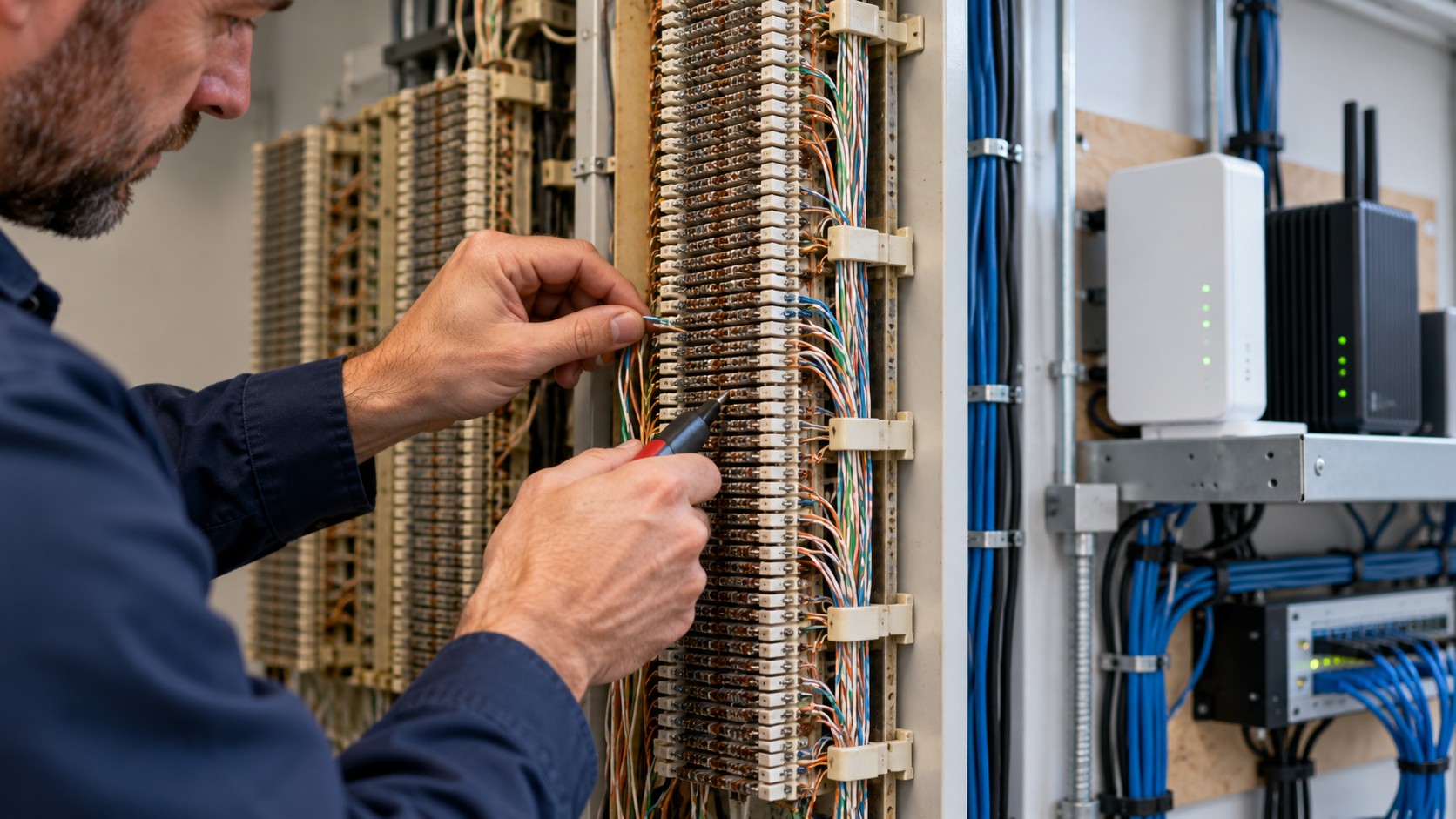
The phone line that has powered your elevator, your fire alarm panel, your security system, your fax machine, and your point-of-sale system for the last 30 years is being discontinued. The copper-based Plain Old Telephone Service infrastructure that built modern business communications is being retired by the carriers, and the timeline is no longer theoretical.
If you haven't started planning for POTS replacement, you are already behind the curve on one of the most material infrastructure transitions in a generation.
Why POTS Is Going Away
AT&T, Verizon, Lumen, and other incumbent carriers have been granted regulatory authority by the FCC to discontinue POTS service in markets across the country. The copper network maintenance cost is enormous and increasing. The subscriber base has declined to a fraction of its peak. And the engineers who understand how to maintain aging copper infrastructure are retiring faster than they can be replaced.
The FCC sunset process is moving at different speeds in different markets, but the direction is consistent and irreversible. In areas where POTS service has already been discontinued, customers who didn't plan ahead found themselves with elevator phones and fire alarm communicators that stopped working overnight. In markets still in transition, carriers are increasing POTS pricing dramatically and degrading service quality to accelerate customer migration.
The Telarus "Copper Sunset: A Complete Guide to POTS Replacement" resource documents this transition comprehensively. The key finding is that organizations with analog-dependent infrastructure have a narrowing window to plan and execute a managed migration rather than being forced into an emergency one.
What Depends on Your POTS Lines
The first step in a POTS replacement project is an accurate inventory of every device and application that depends on analog copper. This is consistently the most time-consuming part of the process, because most organizations don't have a current record of all their POTS lines. Lines that were installed for specific purposes years ago are still active, still billing, and still in service for devices that may or may not still be operating.
The typical categories of POTS-dependent infrastructure include elevator emergency phones, which are subject to specific regulatory requirements around communication capability; fire alarm communicators and pull station dialers, which are often the most critical and most regulated analog devices; security alarm panels and door access dialers; fax machines and multi-function devices with fax capability; credit card terminal backup dial lines (many legacy POS systems); and legacy PBX systems with analog trunk connections.
Each of these categories has replacement options, but the replacement path is different for each one, and some require careful coordination with the relevant regulatory authority, building management, or service provider before any change is made.
The Replacement Technologies
The most common POTS replacement technology is a cellular analog terminal adapter, which plugs into a standard phone jack on the device side and connects over LTE or 5G on the network side. The device in question doesn't know it's no longer talking over copper. It works the same way. The difference is that the network path uses cellular rather than the copper telephone network.
For applications that can be modernized rather than just replaced on a like-for-like basis, IP-based alternatives are worth evaluating. A fire alarm panel that supports IP communication can connect directly over your existing broadband infrastructure rather than requiring a separate cellular or analog path. An elevator phone that supports VoIP can be connected to your unified communications platform. A fax machine that can be replaced with a cloud fax service eliminates the analog device entirely.
The right replacement approach depends on the device, the regulatory requirements, the connectivity infrastructure available at the location, and the cost structure that makes sense for your specific portfolio of analog lines.
What a Managed Transition Looks Like
Organizations that approach POTS replacement with a structured process end up in a dramatically better position than those who respond reactively to service discontinuations. A structured approach starts with a complete inventory of analog lines across your location portfolio. It categorizes each line by device type, criticality, and regulatory requirement. It identifies the replacement technology for each category and sequences the migration to prioritize highest-risk devices. And it manages the carrier transition, device configuration, and testing process through implementation.
APA manages POTS replacement programs for multi-location clients across retail, QSR, healthcare, and property management. We have sourced cellular replacement technology from the full range of providers in the market and have managed transitions ranging from single-location projects to multi-site programs across hundreds of locations. If you haven't started the inventory process, starting there is the right first step, and it's work we can help you with immediately.