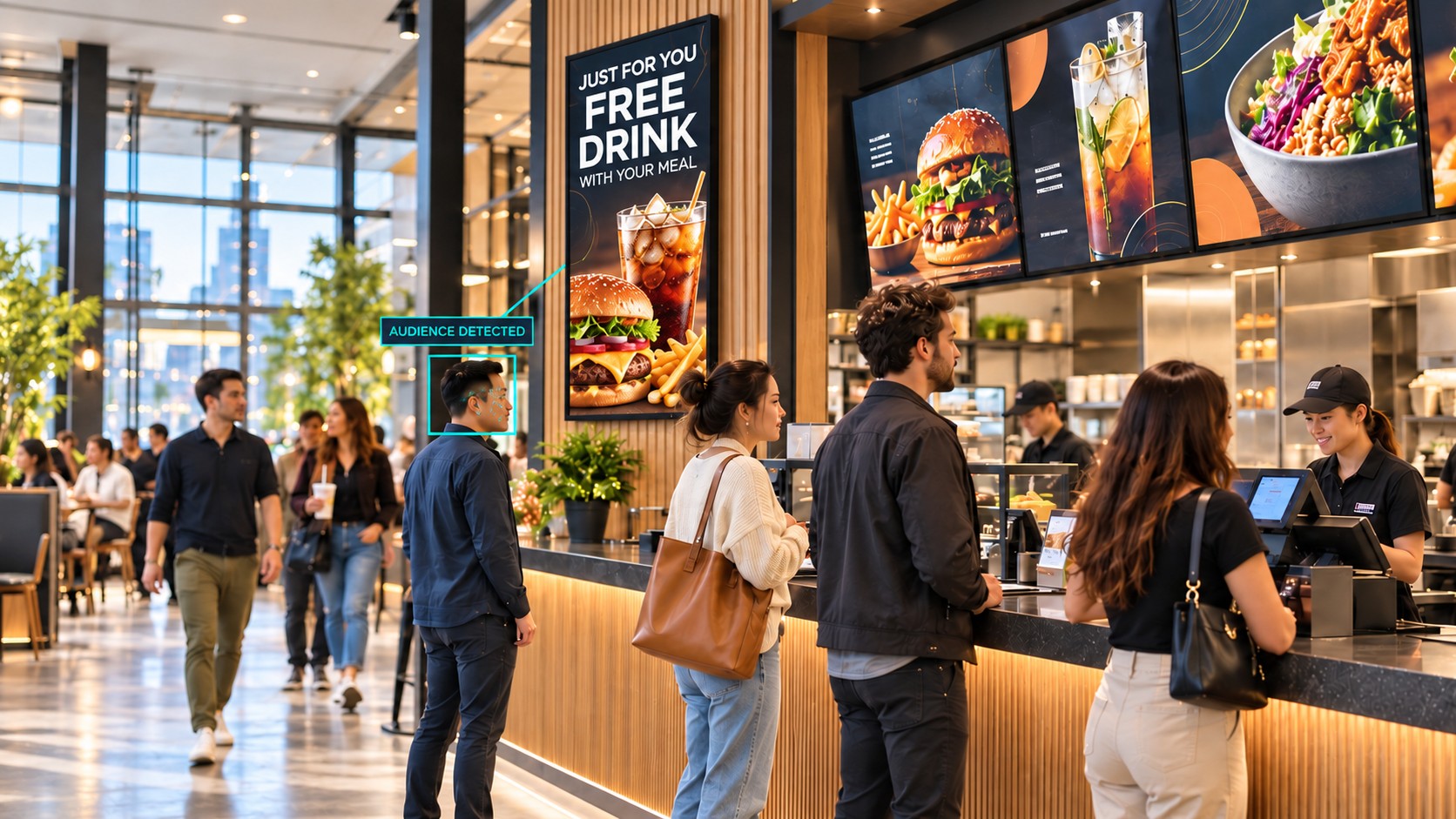
You already have cameras in your locations. Most businesses in retail, QSR, fitness, and hospitality have had cameras for years. They're pointed at the front door, the cash register, the parking lot. They record. They archive. They get reviewed after something goes wrong.
That's not what cameras can do anymore.
Computer vision AI has changed what a camera is. A camera connected to an AI platform like CieloVision isn't a recording device. It's a real-time intelligence layer that reads what's happening in your physical space and acts on it while the moment still matters.
The Problem With How Most Businesses Experience Their Customers
Most businesses that operate physical locations manage their customer experience based on data that is already old by the time it's available. End-of-day transaction reports. Weekly foot traffic summaries. Monthly mystery shopper findings. Post-visit survey results. Every one of those data points tells you what happened after the opportunity to influence it has passed.
Meanwhile, the experience unfolding in your space is responding to nothing. Your digital signage is showing content scheduled last Tuesday. Your promotions are running on a timing sequence that doesn't know whether there are two people or forty in the building. Your upsell messaging is the same at 7 AM on a Monday as it is at noon on a Friday when the line runs to the door.
Altitude Trampoline Park saw a 25% lift in concession revenue after implementing CieloVision's computer vision AI. That result didn't come from changing what they were selling. It came from changing when and how they communicated it, based on who was actually in the space at any given moment.
What Computer Vision AI Actually Does
CieloVision's platform uses existing cameras to capture real-time data about what's happening in a physical space: traffic flow, dwell time, demographic signals, queue depth, customer behavior patterns. The system processes that data continuously and responds to it automatically based on rules the operator sets. When traffic builds, content changes. When the queue extends past a threshold, messaging adjusts. When customer behavior patterns indicate a decision point, the right content appears on the nearest screen.
This isn't a science experiment. CieloVision is deployed across retail chains, QSR operators, fitness centers, entertainment venues, and hospitality environments. The platform is built on Samsung display infrastructure for reliability and is designed to work with cameras and screens already in place at most locations, which dramatically reduces deployment cost and complexity.
The 2026-27 Telarus Tech Trends Report identifies AI deployment at the physical edge as one of the highest-growth categories in enterprise technology this year. The gap between organizations that are putting AI to work in their physical environments and those that are still analyzing last week's data is widening. It's already measurable in revenue and guest experience outcomes.
The Use Cases Worth Understanding
Revenue lift is the most immediate and measurable application. When your digital signage responds to who is actually in front of it, promotion relevance improves and conversion rates follow. CieloVision customers across retail, QSR, and entertainment have documented revenue increases directly attributable to this dynamic content personalization at the moment of consideration.
Operational efficiency is the second major application area. When a platform can see queue depth in real time, it can trigger staffing alerts, open additional service lanes, or adjust customer messaging to manage wait time expectations before frustration sets in. That's not automation displacing people. It's automation giving your team the information they need to respond before the customer is already unhappy.
Loss prevention and safety monitoring are the third application area, and one that's often undervalued. A computer vision platform that can detect unusual dwell patterns, identify tailgating through access points, or flag inventory anomalies is doing work that would otherwise require significant manual oversight. These capabilities can integrate with your broader security program in a way that traditional camera archiving never could.
The Data Privacy Question
Any honest discussion of computer vision AI in retail and hospitality has to address data privacy. CieloVision's platform is built for privacy compliance. The system uses anonymized demographic signals rather than biometric identification. It does not store personally identifiable information and is designed to comply with state and federal privacy regulations. The business outcome is behavioral intelligence about aggregate patterns, not data about individual customers.
For organizations in healthcare, finance, or other regulated industries that operate retail-adjacent environments, the privacy architecture matters and should be evaluated carefully. APA helps clients assess the privacy posture of any technology platform against their specific regulatory environment before deployment.
Where APA Fits
CieloVision is one of APA's technology partners, and one we've positioned for clients in retail, QSR, and multi-location environments where real-time customer engagement directly drives revenue. We help clients evaluate whether the platform is the right fit for their specific environment, design the deployment around existing infrastructure, and manage the vendor relationship through implementation and beyond. The technology is genuinely differentiated. The question is always whether the timing and the use case are right for your operation, and that's exactly the conversation an independent advisor should be having with you.